Ambisonic : Sound & product design & prototyping
Dec 21, 2024

Submitted a paper to AES(Audio Engineering Society) titled "The Design and Construction of an Open-Source, Low-Cost, 4-Channel Ambisonic Microphone."
the science
There are currently several ‘surround sound’ systems, most notably Dolby for Cinema. How is ambisonics different? In conventional ‘surround’ systems, there is a ‘front’ and ‘centre’ from which music and dialog in films sound from. There are three other speakers at the back.
Ambisonics is not confined to the plane of the listener with front, back and sides. It is a full-sphere surround sound technique: in addition to the horizontal plane, it covers sound sources above and below the listener.
All sounds are recorded and can be reproduced with the same quality, regardless of direction. It also means the sound can be rotated and transformed in many ways after the recording
aim
To gain a deep understanding of the field of ambisonics, the context, current and potential applications
To design and prototype an ambisonic microphone
To master the skill and science of recording and reproducing high-quality field recordings and sounds.
contextual enquiry
The low-cost design and construction of an Ambisonic microphone in India holds significant relevance and potential within the country's rapidly evolving technological landscape. India's evolving VR and AR industry, driven by the need for immersive audio experiences, can benefit from affordable Ambisonic solutions.
It is poised to make its mark by enhancing the accessibility of immersive content creation tools and empowering content creators and businesses to deliver high-quality spatial audio experiences.
Furthermore, the educational and research sectors in India can leverage these low-cost Ambisonic microphones to explore spatial audio applications. The microphones can be integrated into academic programs and research projects, fostering innovation and skill development.
potential applications
Assistive hearing aid
Audio recording and productoin
Cinematography
Immersive experiences
process
Literature review
Field Research
Ethnographic observation
Design experiments
Prototyping!
Testing
Calibrating*
field research
The most fundamental soundfield microphone comprises four cardioid capsules arranged in a tetrahedral configuration. This arrangement captures a soundfield from a single point in space across four channels, yielding A-format signals in their unprocessed state.
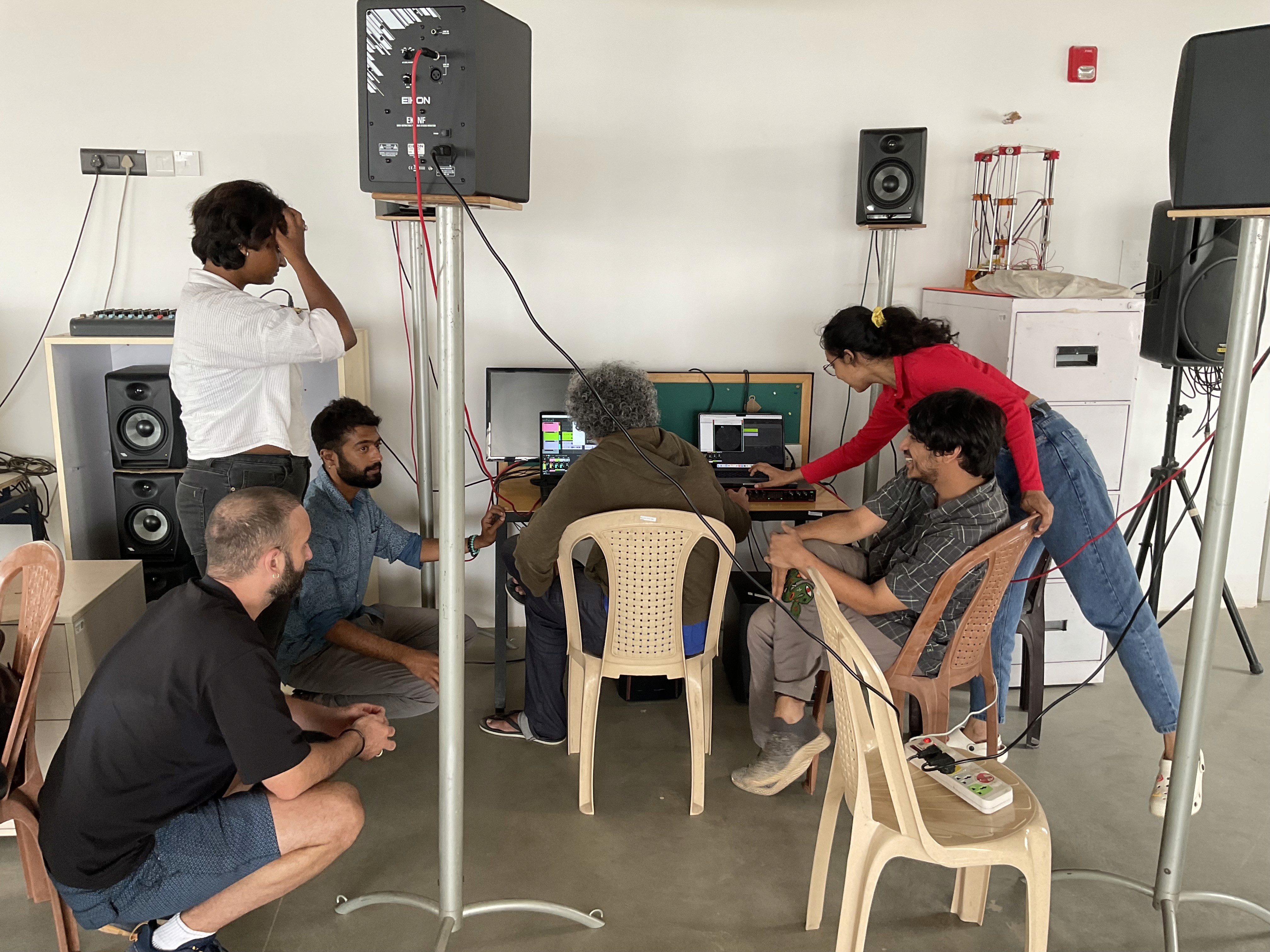
Using the existing ambisonic mic , converted at the lab, we set about capturing different kinds of sound with a focus on movement from around campus. We then learnt to convert and reproduce them using two digital audio workstations called Reaper & Ableton.
ethnographic research
We were lucky enough to be able to meet Mr.Alessandro Olla, an Italian experimental performance artist in the field of light and sound. He uses ambisonic field recordings and transforms them into different varieties, timbres & frequencies of sound with varying effects.
We spent two weeks shadowing his work as he went about his field recordings, converting and reproducing into a usable format, adding effects and building a story, a curated audio track.



design experiments
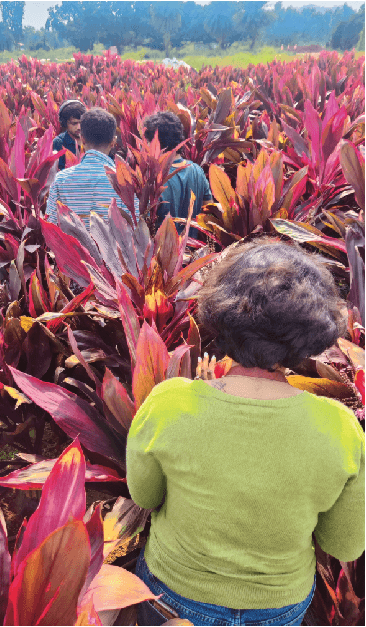
This was a research based task to capture frequency-specific field sounds. Using the existing ambisonic mic at the lab and with re-inforced knowledge and skill about working with ambisonics, we set up about capturing different types of sound with a wide range of movement.
We were able to capture birds chirping and flying across, the train and planes moving from one side to the other and thunder & rain.
We then set up about converting and reproducing them. After a bit of tinkering with the in-house built applications (also open source), we were able to create sperical harmonics by reproducing the specific frequencies at high quality in an omni-channel output.
prototyping
Finally, armed with a plethora of knowledge of ambisonics and the science behind it, we went about building an ambisonic mic. With the rising demand for new immersive technology, we decided to break the capitalistic cycle and make the technology extremely affordable and open source.
the performance
During our time at the lab, we were fortunate enough to support Mr.Ola for his performance at Goethe Institut in Bangalore. We got to watch first hand how the artist used recordings, blended them with various light patterns and ever-morphing visuals projected on the floor and wall.
2 experimental dancers also participated in the performance. I watched a master weave a story and alert all the townsfolk and got them to follow him.